


Saving 7 Northern Saw-whet Owl Chicks Orphans from a Cut Down Snag
In cooperation with Brooke Tanner from Wild Skies Raptor Center, we'd like to thank the Wild Skies Raptor Center team, volunteers Dustin Gage and Krista Marshall, and taxidermist Kimberly Spence for all their support throughout this process.
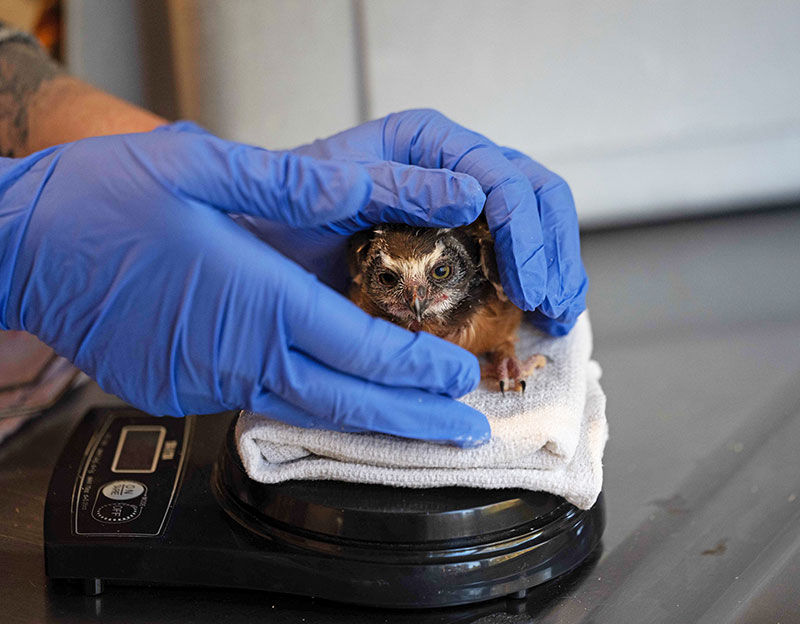
Northern Saw-whet chick being weighed. Photos courtesy of Brooke Tanner, Wild Skies Raptor Center.
Homeless Orphan Chicks Desperately Needed Relocated
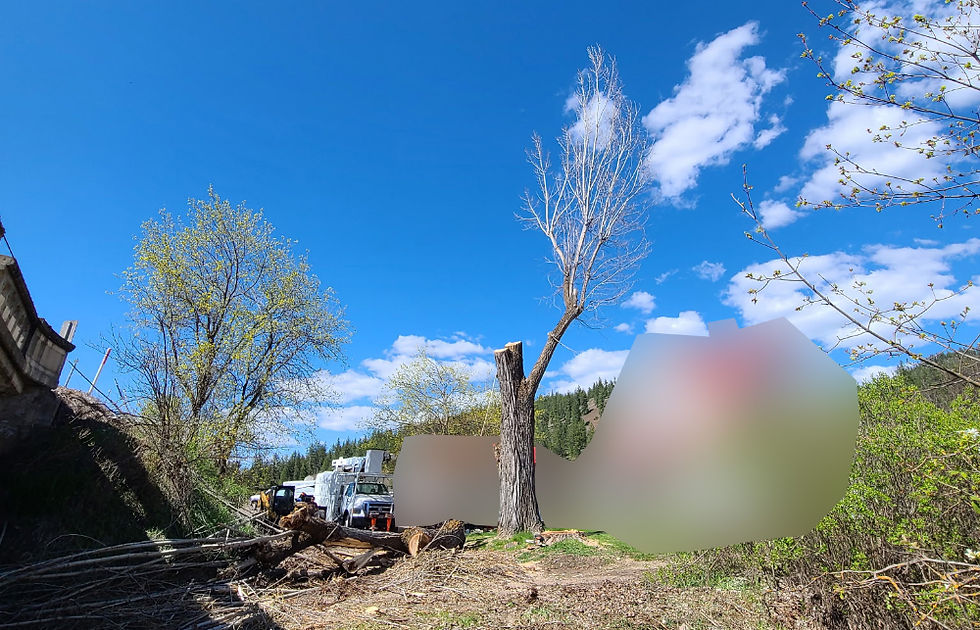
This story begins with a 50-foot-tall Cottonwood tree in Tarkio, Montana. This giant snag was cut down on a spring day, on private property near a house, because it was at risk of falling. What no one realized is that inside there was a Northern Saw-whet Owl family (8 owlets), a beehive and reports of flying squirrels and red squirrels. One tree, so many lives. The arborist thankfully called Wild Skies Raptor Center about rescuing the NSWO chicks whose parents abandoned the location, and a beekeeper to come save the bees.
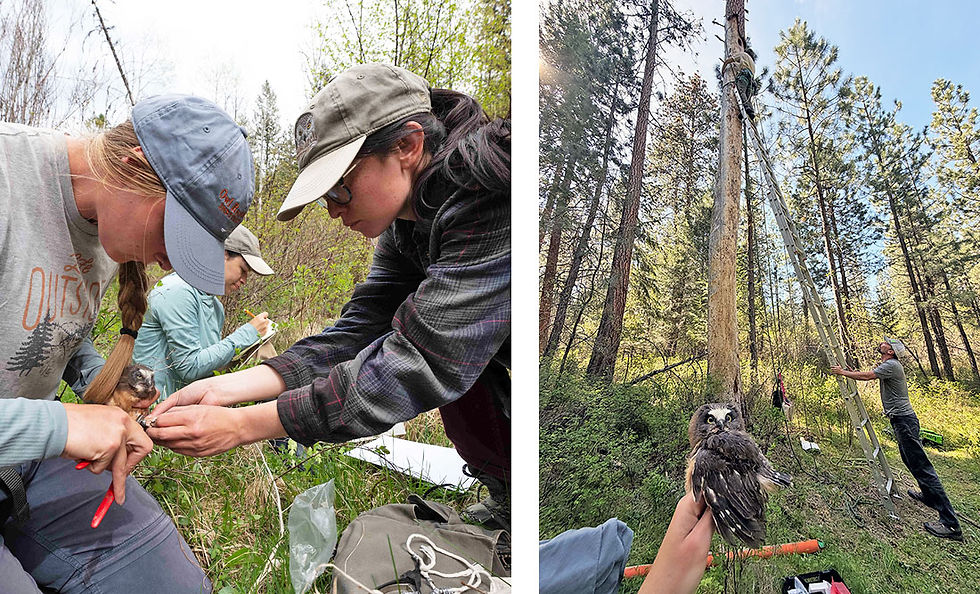
Following the rescue, the center reached out to ORI to see whether it would be possible to relocate the nestlings to other Northern Saw-whet Owl nests within our study area. Fortunately we had a short list of nests in the area that would be suitable surrogate nests to place the chicks. In addition, volunteers Dustin Gage and Krista Marshall were conducting a tree climbing workshop for the ORI, so we had extra assistance to pull it off.
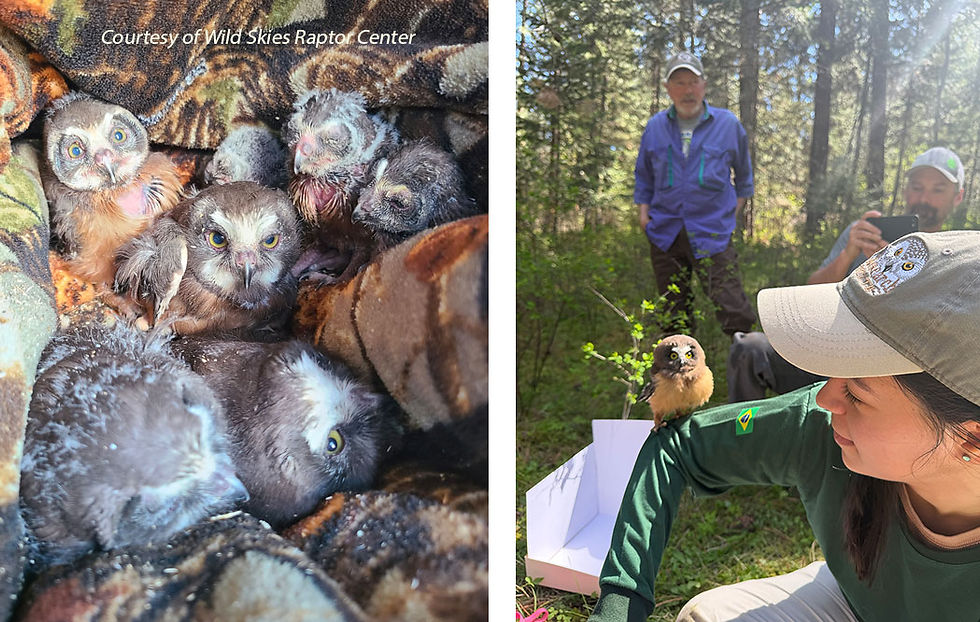
Due to differences in age and the large number of chicks, they were divided into two groups and relocated into two separate foster nests. Younger chicks were placed with nestlings of a similar age, while older chicks were introduced into a nest with more developed nestlings.
Matching chicks by age helps reduce competition and size-related conflicts that naturally occur among nestlings sharing the same nest. To support the foster parents during the transition, an extra supply of rodents was also provided at each nest as a little “fast-food delivery.” Both the relocated chicks and the chicks already present in the foster nests were banded so that the ORI team could continue monitoring their development.
But a 50ft fall is brutal. Unfortunately, one of the rescued chicks did not survive long enough to be relocated and was later preserved by Flock Taxidermy for educational purposes.
In the next 48 hours Owl Research Institute, in coordination with Wild Skies Raptor Center was able to place all 7 owlets in foster nests. A remarkable effort was made by all and gave the owlets a real second chance.
Consider waiting until late summer or fall before cutting trees
This story is also a reminder that, if you have trees that need trimming or removal, please consider waiting until late summer, fall, or winter, after nesting season has passed. You never know how much life a dead tree may be supporting.
This is ‘Tarkio’, the owlet that didn’t make it. We’re grateful to @flocktaxidermy to allow this Saw-whet chick to share its story with you and all those that see it in the future.
Photo credits: @wild_skies_raptor_center and @flocktaxedermy


